

Erectile Dysfunction: Specialized Evaluation with International Recognition
A medical approach based on scientific evidence, including complex cases, now available in Portugal.
Understanding Erectile Dysfunction: When the Cause Goes Beyond the Symptom
Erectile Dysfunction (ED), also referred to as sexual impotence, is characterized by the persistent difficulty in achieving or maintaining an erection with sufficient rigidity for sexual intercourse.
More than treating the symptom itself, the clinical approach focuses on identifying the underlying cause, which may be vascular, hormonal, neurological, or structural in origin.
A proper evaluation is essential to guide therapeutic options responsibly and individually.
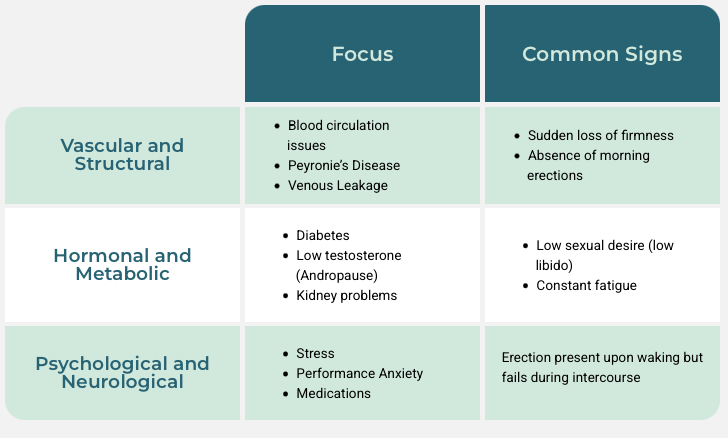
Common Causes and Warning Signs
Focus
Common Signs
Vascular and Structural
- Blood circulation issues
- Peyronie’s Disease
- Venous Leakage
- Sudden loss of firmness
- Absence of morning erections
Hormonal and Metabolic
- Diabetes
- Low testosterone (Andropause)
- Kidney problems
- Low sexual desire (low libido)
- Constant fatigue
Psychological and Neurological
- Stress
- Performance Anxiety
- Medications
Erection present upon waking but fails during intercourse
International Standard Diagnosis
Defining the appropriate clinical approach begins with a rigorous evaluation. The diagnostic process follows internationally recognized protocols, similar to those used in leading medical centers.
Evaluation Protocol
1. Complete Medical History:
Analysis of all medical conditions and medications in use.
2. Hormonal Profile:
Laboratory tests for Testosterone, Prolactin, and other indicators.
3. Dynamic Penile Doppler:
A crucial examination to measure blood flow and diagnose vascular problems such as Venous Leakage.
4. Structural Evaluation:
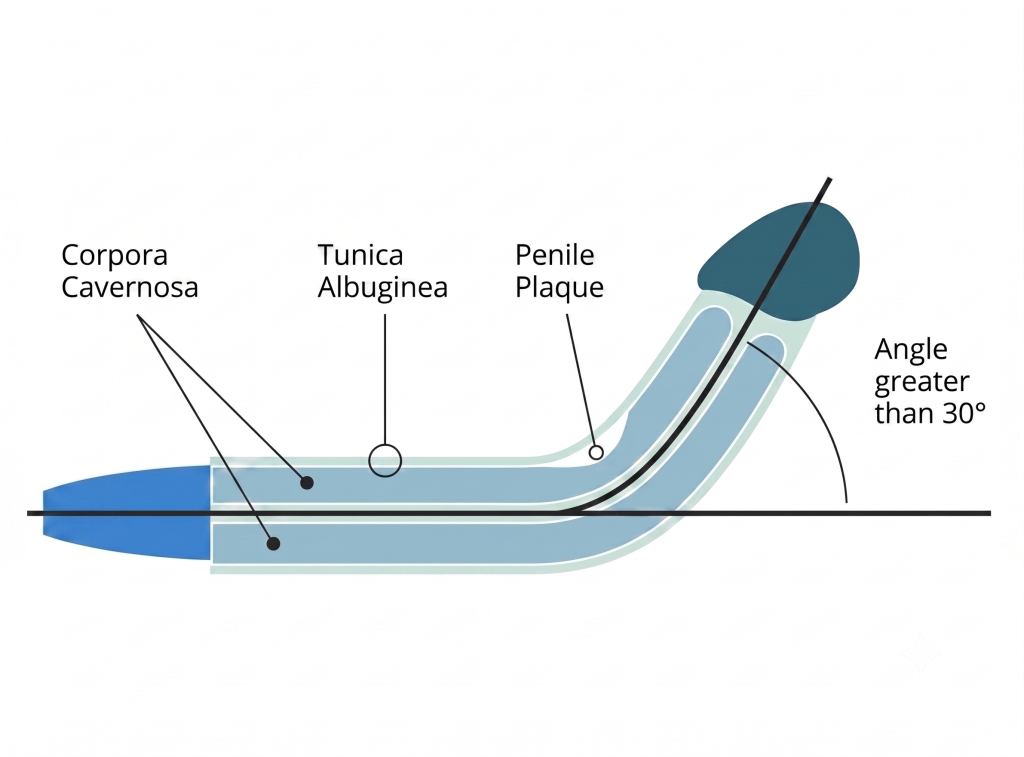
Physical examination to identify plaques, fibrosis, or curvatures affecting rigidity.
Personalized Treatments: From Clinical Care to Definitive Solutions
For the most challenging cases — including those in which medication has failed — Dr. Paulo offers a range of treatments aimed at restoring function safely.
The Difference in Refractory Cases
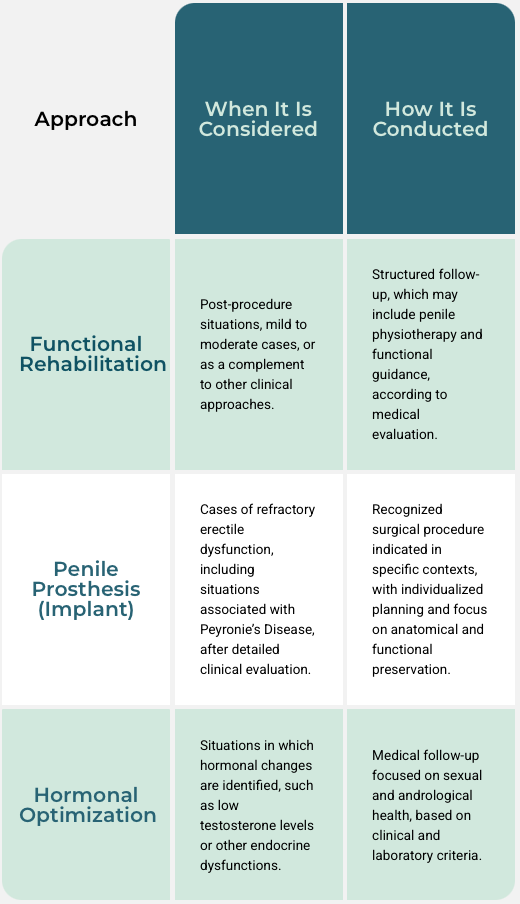
Approach
When It Is Considered
How It Is Conducted
Functional Rehabilitation
Post-procedure situations, mild to moderate cases, or as a complement to other clinical approaches.
Structured follow-up, which may include penile physiotherapy and functional guidance, according to medical evaluation.
Penile Prosthesis (Implant)
Cases of refractory erectile dysfunction, including situations associated with Peyronie’s Disease, after detailed clinical evaluation.
Recognized surgical procedure indicated in specific contexts, with individualized planning and focus on anatomical and functional preservation.
Hormonal Optimization
Situations in which hormonal changes are identified, such as low testosterone levels or other endocrine dysfunctions.
Medical follow-up focused on sexual and andrological health, based on clinical and laboratory criteria.
Integrated Approach: Peyronie’s Disease and Erectile Dysfunction
It is common for Erectile Dysfunction to be associated with structural changes of the penis, such as penile curvature or Peyronie’s Disease. In these cases, the clinical evaluation must consider both conditions in an integrated manner.
The therapeutic approach may involve simultaneous treatment of erectile dysfunction and the structural alteration, according to clinical indication.
In specific situations, surgical procedures may be considered as part of the treatment plan, always following an individualized and thorough evaluation.
Restoring Your Confidence: Testimonials and Contact
Location
We are located in an easily accessible area, with nearby parking facilities and public transportation available.
Every man is unique.
Your treatment should be too.
Book your pre-analysis and receive a personalized evaluation with Dr. Paulo Egydio.