

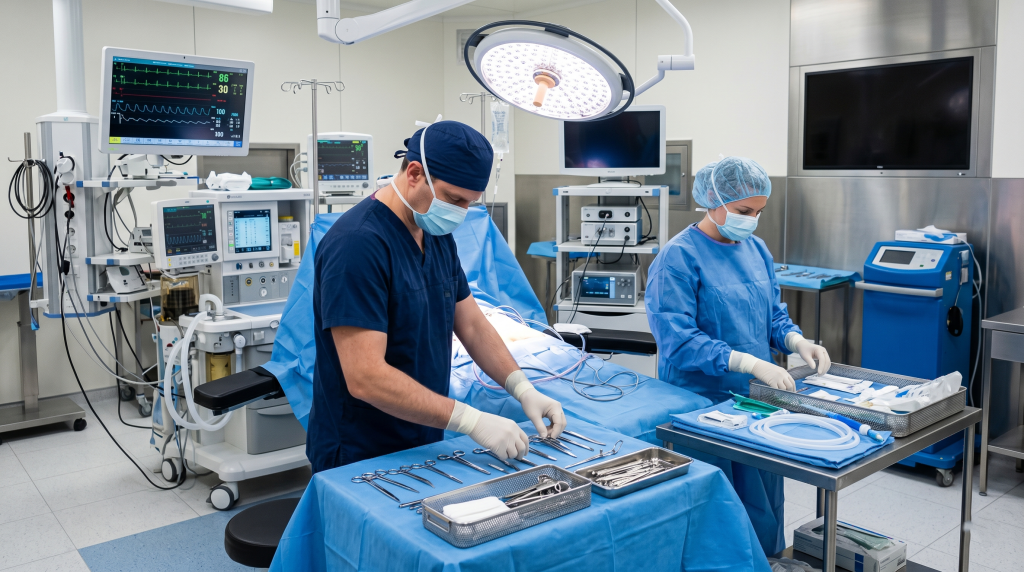
The cost of Peyronie’s disease surgery can vary depending on clinical and surgical factors. The final value is calculated after an individualized evaluation of each case.
The formation of scar tissue inside the penis can cause deformities that can affect sexual life and man’s well-being. Specialized medical evaluation can help define the most appropriate therapeutic approach for each case, also considering the patient’s financial possibilities.
In severe cases, surgery for Peyronie’s Disease can be an option to consider. It is a procedure that can be safe when well indicated and performed by a team with experience. However, it can represent costs for the patient.
There is no fixed price for this type of surgery, since there are multiple aspects involved. Merely as an indication, and without including the medical team’s fees, the costs associated with the procedure can vary, approaching in some cases values in the order of €10,000.
What is Peyronie’s Disease and what are its symptoms
Peyronie’s Disease is characterized by the formation of penile fibrosis. These plaques can alter the elasticity of penile tissues and cause abnormal curvature, which becomes more evident during erection.
In more severe cases, the deformity can difficult penetration or compromise penis rigidity. Living with this situation can be associated with changes in sexual security and sexual quality of life.
Causes can be related to microtraumas in the penis throughout life, often imperceptible, which can occur during sexual activity, sports practices or falls. Inflammatory processes, genetic predisposition, smoking, diabetes and hypertension are also factors potentially associated with the development of the disease.
The most common symptoms are noticed when the penis is erect and include:
- Penile curvature;
- Penile thinning;
- Decrease in penile length;
- Pain;
- Palpable plaques or nodules;
- Difficulty achieving or maintaining an erection;
- Erectile dysfunction;
- Anxiety, insecurity or stress associated with sexual activity.
When is surgery indicated for Peyronie’s disease?
However, it is important to note that the decision for surgery should be shared between the patient and the doctor. The indication should result from a specialized evaluation, performed by a urologist with experience in treating Peyronie’s Disease, who will analyze the stability of the curvature, the presence of pain, erectile function, the degree of deformity and therapeutic objectives.
How much does Peyronie’s disease surgery cost?
Because it is a procedure with high technical specificity, surgical treatment for Peyronie’s disease involves various variables that influence the price of Peyronie’s disease surgery. Among the main elements associated with this procedure are:
- What is the degree of curvature caused by Peyronie’s?
- Is there associated erectile dysfunction?
- Is there loss of length, thinning or other relevant penile deformity?
- Does the patient have comorbidities that may influence surgical risk?
- Did Peyronie’s occur after radical prostatectomy for prostate cancer treatment?
- Is this a first surgery or a reoperation?
- What surgical strategy will be adopted?
- Will penile reconstruction require or not the use of grafts?
- Will it be necessary to implant a penile prosthesis?
- If a prosthesis is necessary, will it be malleable or inflatable?
- What will be the brand and model of the prosthesis?
- What will be the composition of the medical team?
- In which hospital will the patient undergo the procedure?
- What type of anesthesia will be indicated?
- Will there be a need for hospitalization and, if so, for how long?
- Does the patient have health insurance or another cost-sharing mechanism that may cover hospital costs and surgical materials?
Nevertheless, it is possible to consider reference values based on clinical practice for some factors:
- Medical fees: defined after prior patient evaluation, in accordance with the Code of Medical Ethics of the Medical Association;
- Hospital hospitalization costs: approximately €1,800;
- Cost of penile prosthesis: can range approximately between €2,000 and €7,000;
- Cost of penile graft: variable, depending on the material used and the extent of reconstruction needed.
These values may vary according to NHS cost-sharing or health insurance coverage, which may assume the costs related to the procedure in full or in part, according to the conditions applicable to each case.
What are the advantages of Peyronie’s disease surgery?
Surgery for Peyronie’s Disease can contribute to functional and anatomical improvements. Among the potential benefits are:
- Correction of penile deformities: depending on the technique used, surgery can contribute to aligning the penis and potentially to recover part of the length and diameter compromised by the disease;
-
Restoration of erectile function: when there is associated erectile dysfunction, the placement of a penile prosthesis can allow the achievement of penile rigidity;
- Potential impact on well-being and quality of life: treatment of the deformity and erectile dysfunction can be associated with possible changes in security and confidence for sexual life.
Correction of Peyronie’s Disease: main procedures
The cost of Peyronie’s disease surgery should not be the patient’s only concern. It is also important to be informed about the most appropriate surgical strategy, according to anatomy, the severity of Peyronie’s and erectile function.
Penile reconstruction with graft
- It requires multiple suture lines, which may be perceptible after healing;
- As grafts can vary in size and thickness, the penis may show irregularities to the touch;
- Different thicknesses can generate different levels of resistance, increasing the risk of structural changes;
- Because it does not have its own blood supply, the graft can suffer retraction over time.
Tissue expansion
Tissue expansion is a penile reconstruction technique without graft. The procedure consists of making incisions in the area where the penile tissue is stiffened. These cuts allow the tissues to expand, which may contribute to correcting the curvature and possible partial recovery of dimensions.
A study published in the Asian Journal of Andrology on penile lengthening techniques associated with penile prosthesis analyzed 416 patients and indicated an average gain of 3.3 centimeters in penis length, as well as possible correction of curvature.
Peyronie’s disease surgery: do I need a penile prosthesis?
Malleable penile prosthesis implant
The malleable penile prosthesis implant, also known as semi-rigid, consists of the insertion of flexible cylinders inside the cavernous bodies.
The main characteristic of this type of prosthesis is to maintain the penis with sufficient rigidity for penetration, but with flexibility to be accommodated in underwear. To initiate sexual activity, the man positions the penis appropriately.
Inflatable penile prosthesis implant
The inflatable penile prosthesis is composed of a reservoir with saline solution, a pump and two hydraulic cylinders implanted in the cavernous bodies.
The operation depends on activating the pump, which transfers the liquid to the cylinders, allowing the penis to acquire rigidity for sexual intercourse. After sexual activity, the system should be deflated.
The price of Peyronie’s disease surgery with inflatable prosthesis depends on the brand, the model, the hospital, the materials used and the technical demand of the procedure. However, because it is a more complex device, it tends to have a higher cost than the malleable prosthesis.
Specialized evaluation for Peyronie’s Disease
Peyronie’s Disease can bring difficult changes to face. Many patients delay seeking help due to shame, insecurity or because they believe there is no longer a solution, especially when the deformity is pronounced. However, even in the most severe cases, there are safe therapeutic alternatives, including surgical options when well indicated.
For evaluation of your clinical case, contact the clinic to schedule a specialized consultation. During the consultation, it will be possible to evaluate whether surgery is indicated for your case and, when applicable, present an estimate of the cost of Peyronie’s disease surgery.